UTERINE FIBROIDS AND 5 WARNING SIGNS THAT REQUIRE A DOCTOR’S VISIT!
10/14/2026 4:41:33 PM
Uterine fibroids (also known as leiomyomas or myomas) are benign growths of the uterine smooth muscle. This is a very common gynecological condition across all age groups, from reproductive years to menopause and post-menopause. However, this condition has recently been diagnosed with increasing frequency in younger women.
This article was compiled by Dr. Pham Nguyen Thao Ngan – Obstetrician & Gynecologist | CarePlus International Clinics to help women learn more about the condition and find effective treatment options!
1. What Are Uterine Fibroids?
-
Uterine fibroids are common noncancerous growths of the uterus that frequently appear during childbearing years. Fibroids are not cancerous and almost never develop into cancer. They are also not associated with a higher risk of other types of uterine cancer.
-
Fibroids vary in size, shape, and number. You can have a single fibroid or multiple ones. Some fibroids may be tiny and undetectable to the human eye, while others can grow as large as a grapefruit or bigger. Extremely large fibroids can distort both the inside and outside of the uterus. In severe cases, large fibroids can expand to fill the pelvic or abdominal area, making the uterus size comparable to that of a full-term pregnancy.
-
Many women have uterine fibroids without knowing it, as they often cause no symptoms. A doctor may discover them incidentally during a routine gynecological exam or prenatal check-up.
2. Symptoms of Uterine Fibroids
Many women with uterine fibroids experience no symptoms at all. For those who do, symptoms depend on the location, size, and number of fibroids.
The most common symptoms include:
-
Heavy menstrual bleeding or severe menstrual cramps.
-
Prolonged periods or shorter intervals between periods.
-
Pelvic pressure or pain.
-
Frequent urination or difficulty emptying the bladder.
-
Enlarged abdomen/bloating.
-
Constipation.
-
Pain in the abdomen, lower back, or pain during sexual intercourse.
In rare cases, a fibroid can cause sudden, severe pain when it outgrows its blood supply and begins to degenerate.
3. When to See a Doctor
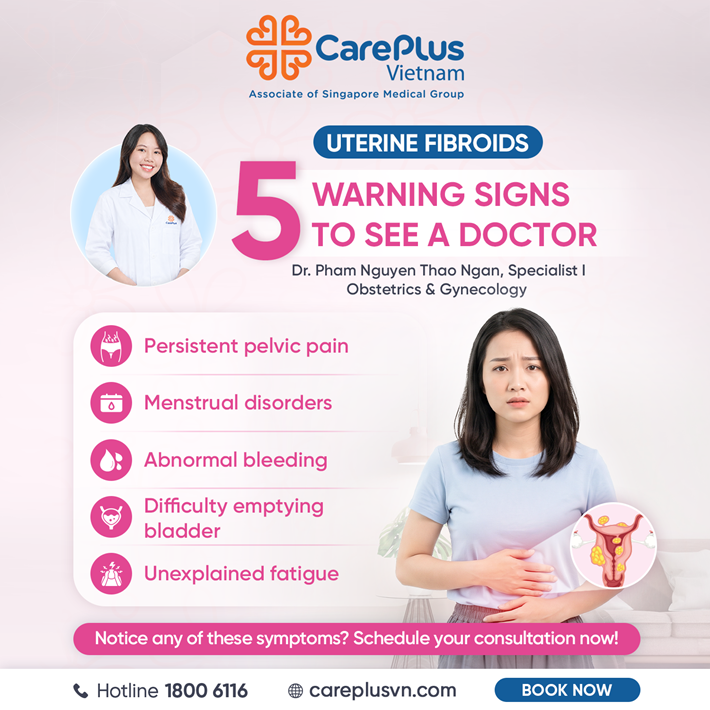
Schedule an appointment with a doctor if you experience:
-
Persistent pelvic pain.
-
Abnormally heavy or painful periods that interfere with your daily activities.
-
Spotting or bleeding between periods.
-
Inability to empty your bladder completely.
-
Prolonged fatigue or weakness (signs of anemia).
Seek immediate emergency care if you have severe vaginal bleeding or sudden, sharp pelvic pain.
4. Risk Factors
Risk factors for uterine fibroids include:
-
Race: Black women are at a higher risk of developing fibroids, often at a younger age, with larger or more numerous tumors, and experiencing more severe symptoms compared to other racial groups.
-
Family history: If your mother or sister had fibroids, you have a higher risk of developing them.
-
Other factors: Onset of menstruation before age 10; obesity; vitamin D deficiency; a diet high in red meat and low in green vegetables, fruits, and dairy products; and alcohol consumption.
5. Complications
Uterine fibroids are generally not dangerous and do not severely affect overall health. However, in some cases, they can cause pain or excessive menstrual bleeding, leading to anemia.
Impact on Pregnancy
Usually, uterine fibroids do not interfere with getting pregnant. However, certain fibroids—especially submucosal fibroids—can cause infertility or pregnancy loss.
Uterine fibroids also increase the risk of certain pregnancy complications, such as:
-
Placental abruption: The placenta peels away from the inner wall of the uterus before delivery.
-
Fetal growth restriction (IUGR): The baby does not grow as expected in the womb.
-
Preterm birth: Delivery occurs too early (before the 37th week of pregnancy).
6. Prevention
Research is ongoing to determine the exact causes and prevention methods for uterine fibroids. While there is currently no definitive way to prevent them, only a small percentage of fibroids require medical treatment.
You can lower your risk by adopting healthy lifestyle habits:
-
Maintain a healthy weight.
-
Exercise regularly.
-
Eat a balanced diet rich in fruits and vegetables.
📢 If you are feeling concerned or experiencing any unusual symptoms, don't hesitate to schedule an appointment at CarePlus for a timely consultation with our specialists!
📞 For consultation and appointment booking, please contact our Hotline at 1800 6116 or send a message to the CarePlus Fanpage for prompt assistance.