CERVICAL CANCER: EARLY PREVENTION, TIMELY DETECTION, LIVING HEALTHY WITH PEACE OF MIND
11/20/2026 8:47:57 AM
No pain, no warning signs, yet it can silently progress for many years. That is exactly what makes cervical cancer so frightening.
Cervical cancer is one of the most common cancers in women, and most cases are caused by the HPV virus (human papillomavirus), a very common sexually transmitted virus that most of us may have been exposed to at some point in our lives. Many women are only diagnosed at a late stage, because the early stage has almost no symptoms.
But the good news is that cervical cancer is among the rare cancers that can be effectively prevented through HPV vaccination and regular screening. Understanding it correctly and acting early is the key to protecting yourself.
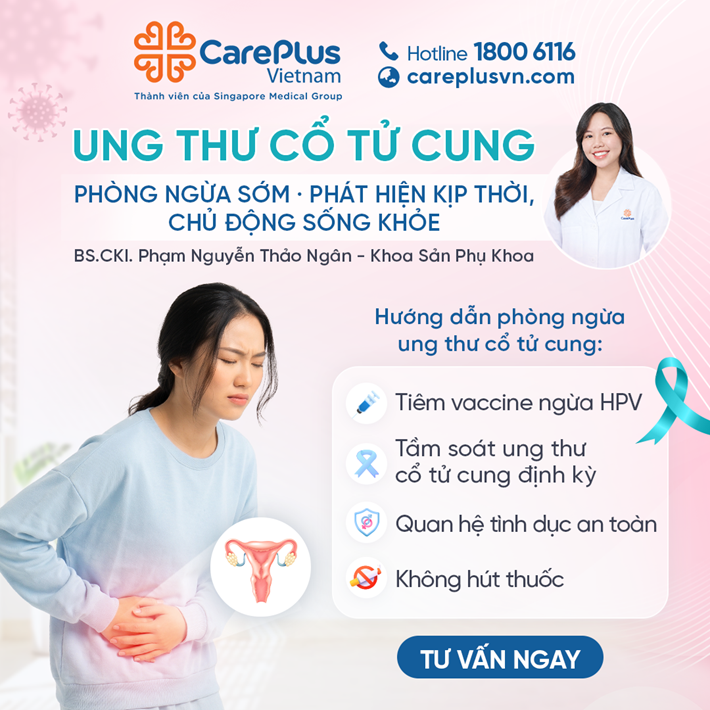
The article below was written by Dr. Pham Nguyen Thao Ngan, Level 1 Specialist in Obstetrics and Gynecology, CarePlus Clinic System, to help women recognize early signs, understand the risks, and take proactive steps to protect their health!
1. WHAT IS CERVICAL CANCER?
Cervical cancer is the growth of abnormal cells in the cervix. The cervix is the lower part of the uterus, connecting to the vagina.
Many strains of the human papillomavirus, also known as HPV, cause most cases of cervical cancer. HPV is a common sexually transmitted infection. When exposed to HPV, the body’s immune system usually fights it off and prevents the virus from causing harm. However, in some cases, the virus persists in the body for many years. This contributes to the process of turning some cervical cells into cancer cells.
You can reduce your risk of cervical cancer by getting the HPV vaccine and undergoing screening tests.
2. SYMPTOMS OF CERVICAL CANCER
In its early stages, cervical cancer may cause no symptoms. As it progresses, it may cause signs and symptoms such as:
-
Vaginal bleeding after sexual intercourse, between menstrual periods, or after menopause.
-
Menstrual bleeding that is heavier and lasts longer than usual.
-
Heavy vaginal discharge that is bloody, watery, and may have a foul odor.
-
Pelvic pain or pain during sexual intercourse.
3. CAUSES OF CERVICAL CANCER
Most cases of cervical cancer are caused by HPV. HPV is a common virus transmitted through sexual contact. In most cases, HPV does not cause disease and is cleared by the body’s immune system. However, in some cases, the virus can cause changes in cells, which can then lead to cancer.
4. RISK FACTORS FOR CERVICAL CANCER
Risk factors for cervical cancer include:
-
Smoking: Smoking increases the risk of cervical cancer. When HPV infection occurs in smokers, the infection tends to last longer and is less likely to clear on its own.
-
Multiple sexual partners: The more sexual partners you or your partner have, the higher the risk of HPV infection.
-
Early sexual activity: Having sex at a very young age increases the risk of HPV infection.
-
Other sexually transmitted infections (STIs): Having other STIs increases the risk of HPV infection, which can lead to cervical cancer. Other STIs that raise the risk include herpes, chlamydia, gonorrhea, syphilis, and HIV/AIDS.
-
Weakened immune system: You may be more susceptible to cervical cancer if you have a condition that weakens your immune system and you are infected with HPV.
5. PREVENTING CERVICAL CANCER
To reduce your risk of cervical cancer:
-
Get the HPV vaccine: The HPV vaccine can reduce the risk of cervical cancer and other HPV-related cancers.
-
Get regular cervical cancer screening: Screening can detect precancerous changes in the cervix so they can be monitored or treated in time to prevent cancer. Most health organizations recommend starting regular cervical cancer screening at age 21.
-
Practice safe sex: Reduce your risk of cervical cancer by taking measures to prevent sexually transmitted infections, including using condoms and limiting the number of sexual partners.
-
Don’t smoke: If you don’t smoke, don’t start. If you do smoke, talk to your doctor about ways to help you quit.
6. DOCTOR’S ADVICE
Don’t wait for your body to “speak up” before seeing a doctor. Early-stage cervical cancer often has no symptoms, but it can absolutely be detected early through regular screening and effectively prevented with the HPV vaccine.
Book a gynecological check-up today, because your health deserves to be a priority.
🔔 If you are looking to get screened for cervical cancer, CarePlus is offering a 20% discount on cancer screening packages, valid through November 21, 2026. See details here:
▪️ Cervical cancer screening package for only 1,280,000 VND: https://www.careplusvn.com/vi/tam-soat-ung-thu-co-tu-cung-2
▪️ Complete 3-dose Gardasil (USA) package protecting against 9 HPV types, for both men and women aged 15 to 45, priced at 8,850,000 VND (includes the doctor’s consultation fee before each injection; fixed cost for the entire course).