COMMON MISCONCEPTIONS: INFLUENZA VS. SINUSITIS
9/25/2026 1:34:00 PM
Nasal congestion, runny nose, cough, headache, fever… These are all highly familiar symptoms of respiratory tract infections.
However, because they share many overlapping features, it is easy to assume:
"Prolonged nasal congestion means sinusitis."
"Green or yellow nasal discharge indicates a bacterial infection."
"Sinusitis always requires antibiotic treatment."
In reality, it is not that simple.
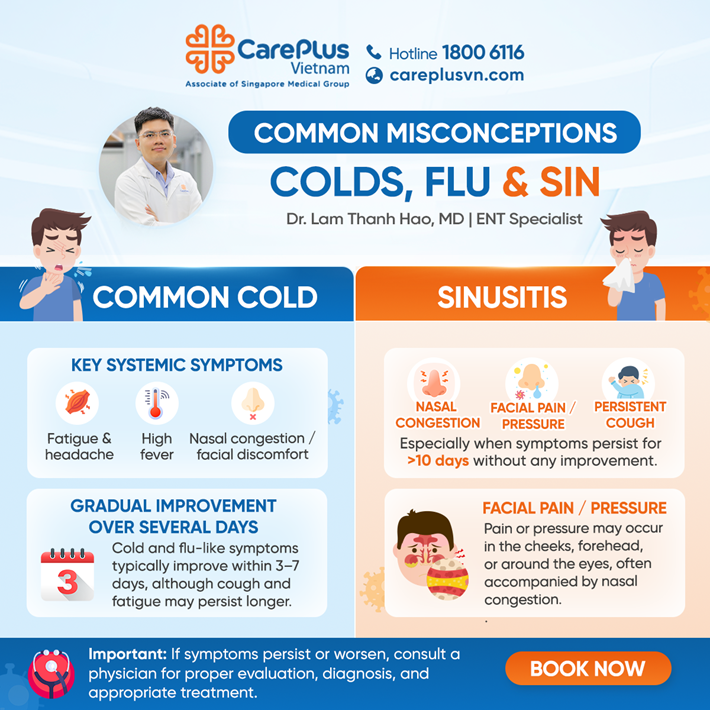
Influenza (the flu) and acute rhinosinusitis share overlapping symptoms. To better differentiate between them, rather than focusing on a single symptom, pay attention to how the illness begins, the predominant symptoms, and particularly its progression over time.
👉 Let's explore the insights shared below by Dr. Lam Thanh Hao (Specialist Level 1), Otorhinolaryngology (ENT) Specialist at CarePlus International Clinics, to better understand these conditions and how to prevent them.
INFLUENZA: PRIMARILY CAUSED BY VIRUSES
"Flu" is a common term used to describe respiratory infections caused by viruses. Symptoms vary depending on the virus type and the individual patient.
Patients may experience:
- Fever or feverishness
- Headache
- Fatigue
- Cough, sore throat
- Nasal congestion or rhinorrhea (runny nose)
- Myalgia (body aches)
In children, vomiting and diarrhea may also occur.
⚠️ Note: Not everyone with influenza develops a fever. Therefore, the presence or absence of fever alone cannot confirm the underlying cause.
Most uncomplicated viral respiratory infections gradually resolve over time. However, certain symptoms—such as a cough or fatigue—may persist longer.
ACUTE RHINOSINUSITIS: MORE THAN JUST "EXCESSIVE NASAL DISCHARGE"
Acute rhinosinusitis occurs when the mucous membranes lining the nasal passages and paranasal sinuses become inflamed.
Patients may experience:
▪️ Nasal congestion
▪️ Rhinorrhea (runny nose)
▪️ Post-nasal drip (mucus dripping down the throat)
▪️ Cough
▪️ Facial pain or pressure
▪️ Headache
▪️ Sore throat or halitosis (bad breath)
Crucial Fact: Acute rhinosinusitis does NOT automatically mean a bacterial infection.
Viruses cause the vast majority of acute rhinosinusitis cases. Consequently, a diagnosis of "sinusitis" does not inherently call for antibiotic usage.
When should acute bacterial rhinosinusitis (ABRS) be suspected?
Do not rely solely on the color of nasal discharge; instead, evaluate the overall severity and clinical course of the illness.
2 KEY INDICATORS:
1️⃣ Persistent Nasal Congestion and Rhinorrhea:
If nasal congestion, runny nose, or cough persists without signs of improvement, close attention is required. This differs from typical viral infections, which generally improve gradually over time.
2️⃣ Facial Pain or Pressure:
Rhinosinusitis can cause pain, tightness, or a sensation of heaviness in the cheeks, forehead, or periocular (around the eyes) regions. While common in rhinosinusitis, facial pain should not be used in isolation for self-diagnosis, as facial discomfort and headaches can stem from various other conditions.
DON'T RELY SOLELY ON THE COLOR OF NASAL DISCHARGE!
This is one of the most common misconceptions. Yellow or green nasal discharge does NOT definitively indicate bacterial rhinosinusitis.
During a viral respiratory infection, nasal secretions naturally evolve from clear to thicker, cloudy, or discolored as the disease progresses. Discharge color alone is insufficient to diagnose a bacterial infection or justify antibiotic therapy.
Therefore, instead of simply asking:
"What color is the nasal discharge?"
Consider the following:
- How long have the symptoms lasted?
- Are the symptoms improving?
- Is there a high fever or severe facial pain/pressure?
Evaluating the entire symptom cluster and clinical course provides far greater diagnostic value than relying on discharge color alone when considering acute bacterial rhinosinusitis.
HOW DOES IT DIFFER IN CHILDREN?
Identifying rhinosinusitis in young children can be more challenging because they may not clearly articulate symptoms like facial pressure or headaches. Therefore, symptom duration and clinical course are particularly critical.
For pediatric patients aged 1–18 years, the American Academy of Pediatrics (AAP) guidelines outline 3 clinical presentations to identify acute bacterial rhinosinusitis:
- PERSISTENT: Nasal discharge or daytime cough lasting more than 10 days without clinical improvement.
- SEVERE: High fever (≥39°C / 102.2°F) concurrent with purulent nasal discharge for at least 3 consecutive days.
- WORSENING ("Double-Sickening"): Symptoms initially improve, followed by a new onset or exacerbation of fever, daytime cough, or nasal discharge.
This is why parents should never rely strictly on the color of mucus to decide if a child has a bacterial infection or needs antibiotics.
DOES SINUSITIS ALWAYS REQUIRE ANTIBIOTICS?
❌ No.
The majority of acute rhinosinusitis cases are viral and self-limiting, resolving without antibiotic intervention. Antibiotics target bacterial infections and are ineffective against viral pathogens.
When acute bacterial rhinosinusitis is suspected, a physician will evaluate the symptoms, severity, and clinical course to determine whether antibiotic therapy is indicated or if watchful waiting is appropriate.
Self-prescribing antibiotics based on green or yellow discharge provides no clinical benefit, increases the risk of adverse drug reactions, and contributes to antimicrobial resistance.
WHEN SHOULD YOU CONSULT A DOCTOR?
Medical evaluation by a healthcare professional is recommended if you experience:
• Symptoms persisting for more than 10 days without improvement
• Severe or worsening symptoms
• Fever lasting more than 3–4 days
• Severe headache or intense facial pain/pressure
• Temporary improvement followed by sudden worsening ("double-sickening")
Emergency Signs in Children: Seek immediate medical attention if a child exhibits difficulty breathing, cyanosis (bluish skin/lips), signs of dehydration, lethargy, or difficulty waking up.
ACCURATE KNOWLEDGE PREVENTS EMPIRICAL SELF-TREATMENT
Influenza and rhinosinusitis present with overlapping clinical features. Avoid diagnosing or differentiating them based on a single isolated symptom.
3 Key Takeaways:
🔹 Influenza: Primarily viral; typically causes cough, sore throat, congestion, runny nose, headache, fatigue, and fever.
🔹 Rhinosinusitis: Characterized by localized sinonasal symptoms, particularly when persistent, severe, or non-improving.
🔹 Most Importantly: Yellow/green nasal discharge does not automatically indicate a bacterial infection or warrant antibiotic treatment.
When symptoms linger, worsen, or follow an atypical course, consult a physician for proper clinical evaluation rather than self-diagnosing and self-medicating.