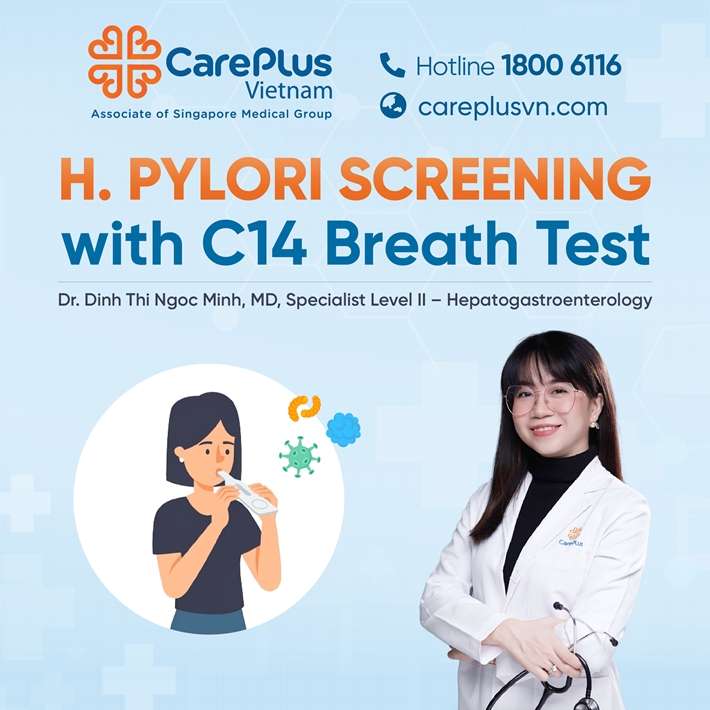
SCREENING FOR HELICOBACTER PYLORI USING THE C14 UREA BREATH TEST
4/2/2026 3:37:12 PM
This article is medically reviewed by Dr. Dinh Thi Ngoc Minh – Gastroenterology & Hepatology
Helicobacter pylori (H. pylori or Hp) is a common bacterium that can cause gastritis, peptic ulcers, and may increase the risk of stomach cancer. According to the Vietnamese Ministry of Health, approximately 70% of the Vietnamese population is infected with H. pylori.
Early detection and complete eradication of H. pylori play an important role in protecting digestive health and reducing the risk of serious complications such as gastrointestinal bleeding, stomach perforation, or gastric cancer.
📌 Among current diagnostic methods, the C14 urea breath test is widely used to detect H. pylori and to evaluate treatment effectiveness after medication.
1. What is the C14 Urea Breath Test?
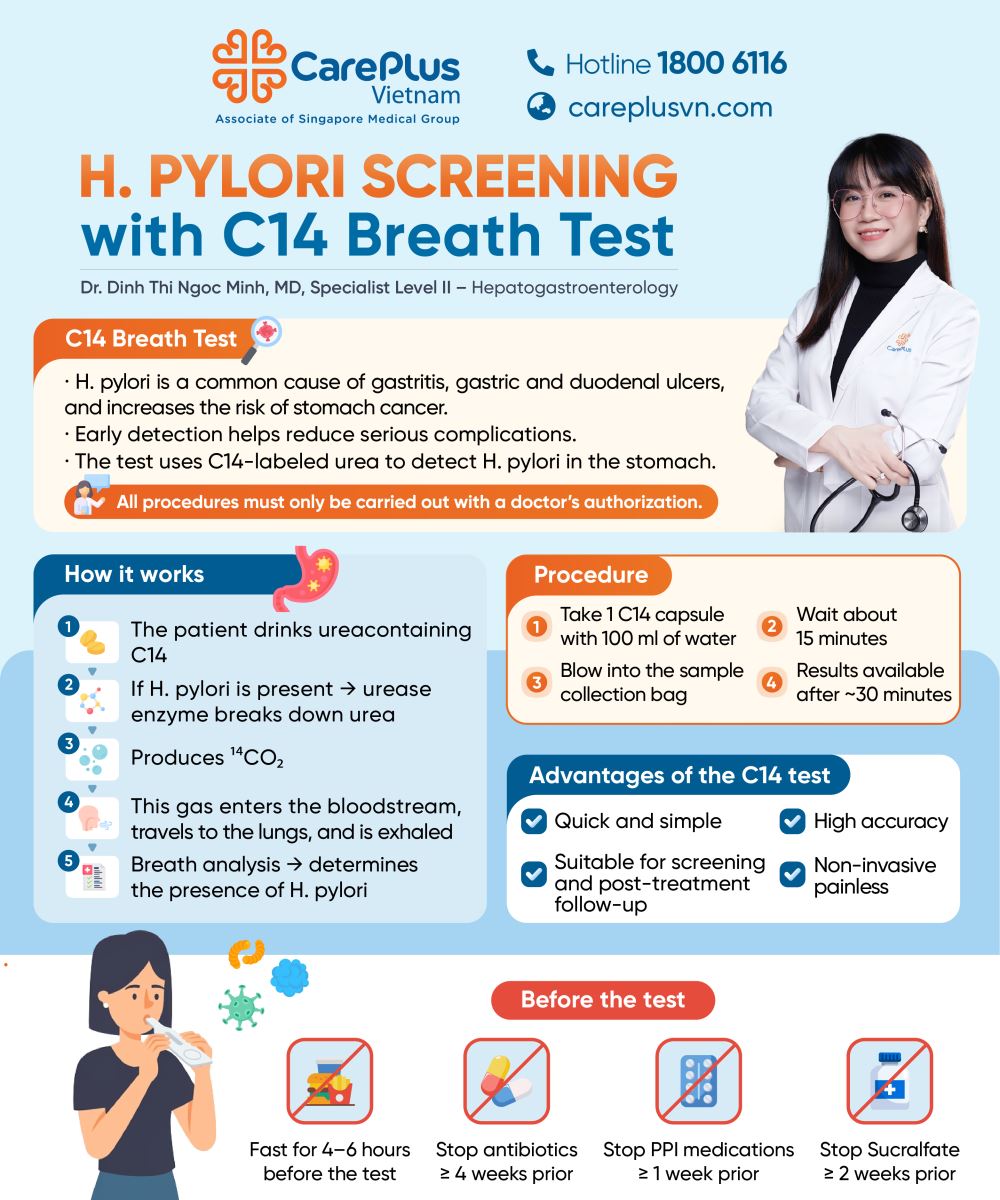
The C14 urea breath test (UBT) is a diagnostic test that uses urea labeled with the radioactive isotope C14 to detect the presence of H. pylori bacteria in the stomach.
2. How does it work?
🔸 H. pylori produces the enzyme urease, which helps the bacteria survive in the acidic environment of the stomach. When a patient drinks urea labeled with C14, the urease enzyme breaks down the urea into ammonia and radioactive carbon dioxide (¹⁴CO₂).
🔸 The ¹⁴CO₂ is absorbed into the bloodstream and then exhaled through the lungs. A breath sample is collected and analyzed to determine the presence of H. pylori.
3. Advantages of the C14 breath test
✅ High sensitivity and specificity, with accuracy close to endoscopy and higher than blood tests.
✅ Simple and quick procedure, suitable for many patients.
✅ Non-invasive and painless, without the discomfort often associated with endoscopy.
4. Testing procedure
🔹 The patient drinks one capsule containing C14-labeled urea with about 100 ml of water (do not chew or crush the capsule).
🔹 Sit still and avoid talking for about 15 minutes.
🔹 Then breathe into the sample collection bag as instructed: take a deep breath through the nose, hold it for 5–10 seconds, and slowly exhale into the bag.
🔹 The breath sample is analyzed, and results are usually available within about 30 minutes.
5. Important preparation before the test
⚠️ Fast for 4–6 hours before the test.
⚠️ Stop antibiotics for at least 4 weeks before testing.
⚠️ Stop proton pump inhibitors (PPIs) for at least 1 week before the test.
⚠️ Stop Sucralfate for at least 2 weeks before testing.
📌 The C14 breath test is a convenient method for detecting H. pylori and monitoring treatment effectiveness. However, it only indicates the presence of the bacteria and cannot assess the condition of the stomach lining or detect structural abnormalities like endoscopy can.
👉 If you experience symptoms such as upper abdominal pain, bloating, indigestion, or persistent heartburn, you should consult a healthcare professional for proper evaluation and appropriate testing.