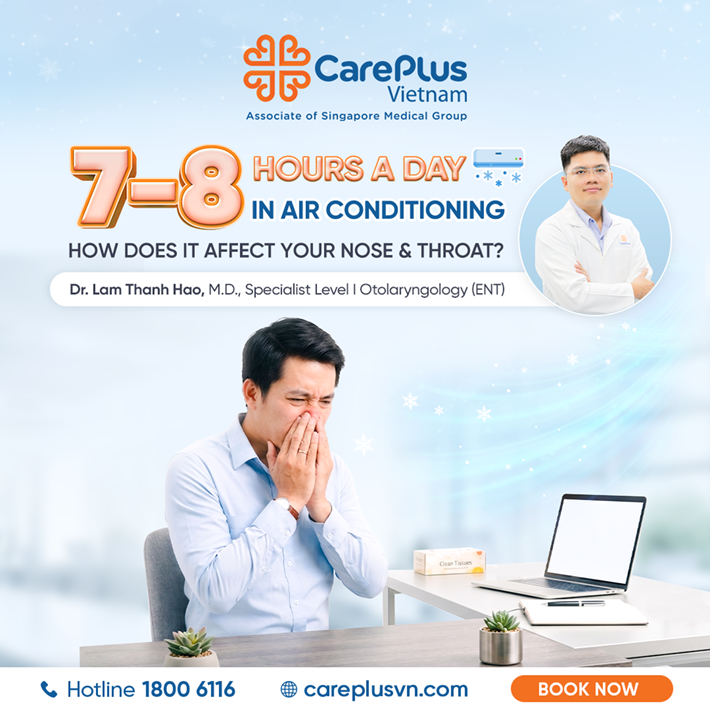
Spending 7–8 Hours a Day in Air Conditioning: How Does It Affect Your Nose and Throat?
8/19/2026 2:41:24 PM
If you work in an office and spend 7–8 hours a day in an air-conditioned environment, you may have experienced symptoms such as a dry or sore throat, nasal congestion, runny nose, sneezing, or a dry cough.
It is true that air-conditioned environments can make the nose and throat drier and more prone to irritation. However, not every case of sore throat or nasal congestion is caused by air conditioning. If these symptoms occur frequently or persist over time, they may be signs of an underlying respiratory condition that should not be overlooked.
1. Why Can Prolonged Exposure to Air Conditioning Cause Nose and Throat Discomfort?
Air conditioning lowers the temperature and often reduces the humidity in the room. Spending many hours in this environment can cause the nasal and throat mucosa to become dry, leading to irritation, soreness, or discomfort.
However, air conditioning is not the only possible cause. Similar symptoms can also occur with allergic rhinitis, non-allergic rhinitis, the common cold, pharyngitis, sinusitis, or other respiratory infections.
2. What Conditions Can Cause a Sore Throat or Nasal Congestion?
Allergic Rhinitis
If you frequently experience repeated sneezing, an itchy nose, a clear runny nose, or nasal congestion—especially after exposure to dust, mold, or other triggers in enclosed environments—these symptoms may be associated with allergic rhinitis.
Common Cold or Viral Respiratory Infections
If a sore throat occurs together with symptoms such as a runny nose, cough, fatigue, body aches, or fever, the cause may be a common cold or another viral respiratory infection.
Crowded office environments may also facilitate the spread of respiratory infections.
Sinusitis
Persistent nasal congestion, excessive nasal discharge, facial pain or pressure, headache, or a sensation of mucus draining down the throat may be associated with sinus problems.
Common symptoms include:
- Persistent nasal congestion
- Nasal discharge
- Facial pressure or pain
- Headache
- Reduced sense of smell
- Postnasal drip, which may cause coughing or a sensation of something stuck in the throat
If these symptoms recur frequently, you should see a doctor to determine the underlying cause.
Dryness and Irritation of the Nose and Throat
This is not necessarily a specific medical condition, but it is relatively common among people who spend long hours in air-conditioned environments.
Common symptoms include:
- Dry nose
- Dry or sore throat
- Throat discomfort
- Dry cough
These symptoms are often more noticeable after prolonged exposure to a cold, dry environment.
3. What Can You Do to Protect Your Nose and Throat?
Drink Water Regularly
Do not wait until you feel thirsty to drink water. Maintain regular water intake throughout the workday to help prevent dry mouth and throat.
Avoid Direct Exposure to Cold Airflow
If possible, adjust the airflow direction or your seating position to avoid having cold air blow directly onto your nose, face, or neck for prolonged periods.
Keep the Room at a Comfortable Temperature
Avoid setting the temperature too low. At the same time, try to minimize sudden temperature changes when moving frequently between an air-conditioned room and the outdoors.
Clean and Maintain the Air Conditioner Regularly
Air-conditioner filters and other components should be cleaned and maintained regularly to reduce the buildup of dust and other potential irritants in the workplace.
Don't Ignore Persistent Symptoms
If nasal congestion, sneezing, sore throat, coughing, or a runny nose keeps recurring, do not simply assume that it is “because of the air conditioner.”
Identifying the underlying cause can help you choose the most appropriate approach to care and treatment.
4. When Should You See a Doctor?
You should seek medical attention if you experience any of the following:
- A sore throat, nasal congestion, or cough that persists without improvement
- Symptoms that recur frequently
- Persistent nasal congestion that affects your sleep or work
- Frequent sneezing, an itchy nose, or a runny nose
- Fever, fatigue, or worsening overall health
- Facial pain, headache, or significant nasal discharge
- Shortness of breath, wheezing, or other unusual symptoms
5. Don't Be Too Quick to Blame the Air Conditioner
Air conditioning can contribute to dryness and irritation of the nose and throat, but it is not always the cause of the problem.