CONJUNCTIVITIS CAN BREAK OUT DURING THE RAINY SEASON - WHAT SHOULD YOU DO TO PREVENT IT?
Conjunctivitis can easily flare up during the rainy season due to high humidity and poor hygiene. Join CarePlus to learn how to prevent it and what to keep in mind if you're already affected, to protect your eyes and your family's in the article below.
9/18/2026 11:23:42 AM
The rainy season, with its high humidity, damp environment, and less-than-ideal sanitary conditions, creates favorable conditions for pathogens to thrive, making conjunctivitis more likely to appear and spread - especially in places with frequent close contact such as homes, schools, and workplaces. Therefore, whether you're proactively preventing the disease or already noticing unusual signs in your eyes, understanding conjunctivitis correctly will help you better protect your own eyes and your family's.
Join CarePlus to learn everything you need to know about conjunctivitis, so you can keep your eyes bright and healthy this rainy season!
1️⃣ What Is Conjunctivitis? Recognizing It Correctly for Timely Care
Conjunctivitis (pink eye) is a common condition during the rainy season, especially in areas lacking clean water, spreading rapidly and with no specific cure available. The disease is caused by the Adenovirus, which is transmitted through the respiratory tract and can survive for a long time in the environment, making it easy to spread within communities with close contact.
The incubation period lasts 2-3 days after exposure to the source of infection, with early symptoms including itching, a gritty or sandy sensation in the eye, redness, eye discomfort, and eyelids stuck together with discharge upon waking. Initially, redness and inflammation appear in only one eye and usually spread to the other eye within a few days.
⚠️ In some cases, subconjunctival hemorrhage may occur, accompanied by a sore throat, mild fever, runny nose, swollen preauricular lymph nodes, and fatigue. If not treated promptly, the disease can damage the cornea, cause keratitis, and lead to long-term vision impairment.
👧 In children, conjunctivitis requires special attention, as their immune systems are still weak and the tissue around their eyes tends to swell more easily. In addition, children often touch their eyes, have close contact with friends, and may find it difficult to follow hygiene practices, making the disease easy to spread within families and schools. Therefore, when a child shows the symptoms mentioned above, parents should take them to see a doctor early to prevent the condition from becoming more serious.
2️⃣ Proactively Prevent Conjunctivitis with Simple Daily Habits
Although conjunctivitis is highly contagious, it can be completely prevented by following the principles of "personal hygiene and environmental hygiene."
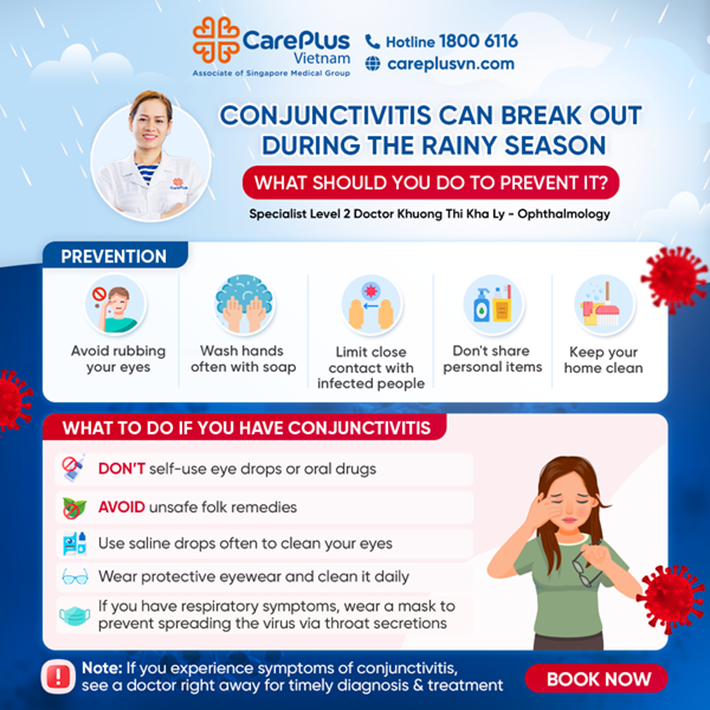
🛡️ Keep the following advice from our Ophthalmology specialists in mind to prevent conjunctivitis:
🔹 Avoid touching or rubbing your eyes with your hands
🔹 Wash your hands frequently with soap, especially after touching shared items, since the disease spreads through tears and eye discharge containing the pathogen. People with conjunctivitis often rub their eyes and then touch shared objects at home, school, or the workplace.
🔹 Limit close contact with infected individuals.
🔹 Use separate personal items such as face towels and eyeglasses.
🔹 Keep your home and living environment clean and hygienic.
3️⃣ What to Do and What to Avoid When You Have Conjunctivitis
🚫 Things to avoid:
▪️ Using eye drops or oral medications on your own without a doctor's prescription.
▪️ Following unverified folk remedies such as steaming with betel leaves, squeezing lemon juice into the eyes, applying leaves or aloe vera, or using bear bile or breast milk, as these can worsen the infection.
▪️ Rubbing your eyes with your hands.
▪️ Going to crowded places while your eyes are still red and watery.
✅ Things you should do:
🔹 Regularly use saline eye drops to cleanse your eyes.
🔹 Wash your hands frequently with soap, especially after each time you use eye drops.
🔹 Wear protective eyewear and clean it daily.
🔹 If you have respiratory symptoms, wear a face mask to prevent the virus from spreading through throat secretions.
🔹 Wash your face towels with soap, dry them in the sun, and avoid sharing personal items with others.
🏥 At CarePlus, customers receive eye care from a team of experienced specialist doctors together with modern equipment, helping to assess eye conditions and recommend the right course of care.
👉 Don't let unusual signs in your eyes become a cause for worry. Take the initiative to get checked and protect healthy eyes for you and your family.
☎️ Message our fanpage or call our free hotline at 1800 6116 to book an appointment now.
This article was medically reviewed by Specialist Level 2 Doctor Khuong Thi Kha Ly - Ophthalmology at CarePlus International Clinics.