Diseases that are more common in women than in men
Women have a higher risk of certain diseases than men. Many health problems are common in both men and women. However, some conditions may be more common in women or affect women differently than men, like common illnesses.
10/12/2022 12:04:47 PM
Breast cancer
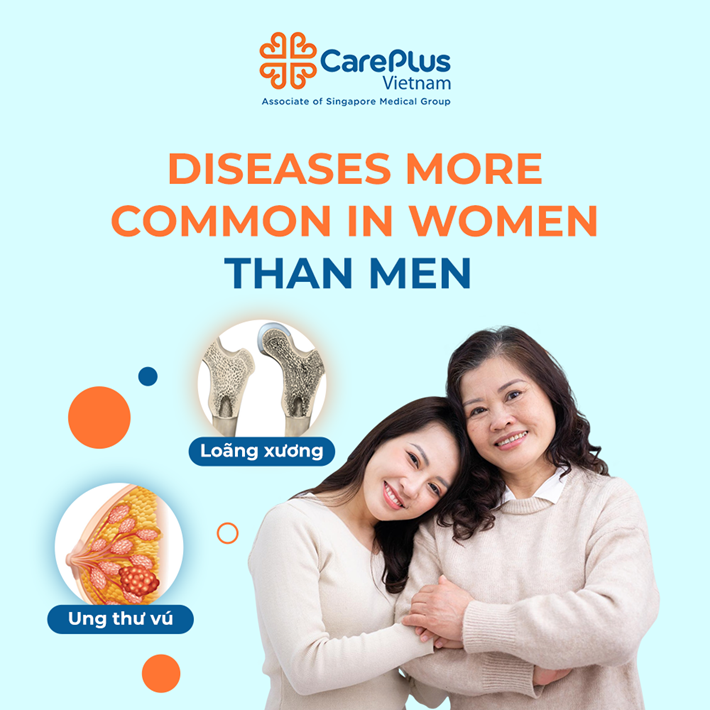
Women are at high risk for gynecological cancers (cervical, uterine, ovarian, vaginal, vulvar) and other cancers (breast, pancreatic, colorectal, lung cancer) with the highest risk of breast cancer.
Women are 10 times more likely to develop breast cancer than men. Research has shown that the reason women are more susceptible to breast cancer is that they have more breast cells and a faster growth rate of breast cells than men. As a result, cancer cells in women tend to multiply at a higher rate than in men.
Osteoporosis
You may be mistaken in thinking that only women get osteoporosis. This is not entirely accurate, but women tend to suffer more and suffer from this disease than men. While one in four men is at risk of developing this condition, the rate in women is one in two.
Heart-related diseaes
As life becomes increasingly stressful plays a role in triggering heart attack symptoms in women. On the other hand, the warning signs for myocardial ischemia in women are very vague. Rarely is the typical picture of angina. On the contrary, there are often symptoms that are easy to deceive even the doctor such as dizziness, fatigue, headache, sleep disturbance, difficulty breathing, indigestion, back, shoulder or throat pain, jaw pain or pain that radiates to the jaw. , pain from the center of the chest spreading to the arm... Therefore, women rarely go to the Cardiology department but go "around" causing mild disease to become severe.
Especially for women over the age of 50, not only face age, but women also have a higher risk of heart disease. Because when entering perimenopause and menopause, the level of estrogen - the hormone that helps protect heart health decreases. Cardiovascular disease is therefore uninvited.
Stroke
In the US, women have 55,000 more strokes each year than men. Women also die from the disease more often than men, according to the American Heart Association and Stroke Association.
Taking birth control pills, hormone therapy, pregnancy and just having a baby all increase a woman's risk of stroke, said Diana Greene-Chandos, a professor of neurology at Ohio State University. , explain.
Pregnancy complications such as preeclampsia also increase the risk of stroke in the long term. In addition, other illnesses such as autoimmune diseases, migraines, and depression all increase the risk of stroke in women. You can reduce your risk by eating a healthy diet, exercising regularly, not smoking, and keeping your blood pressure checked.