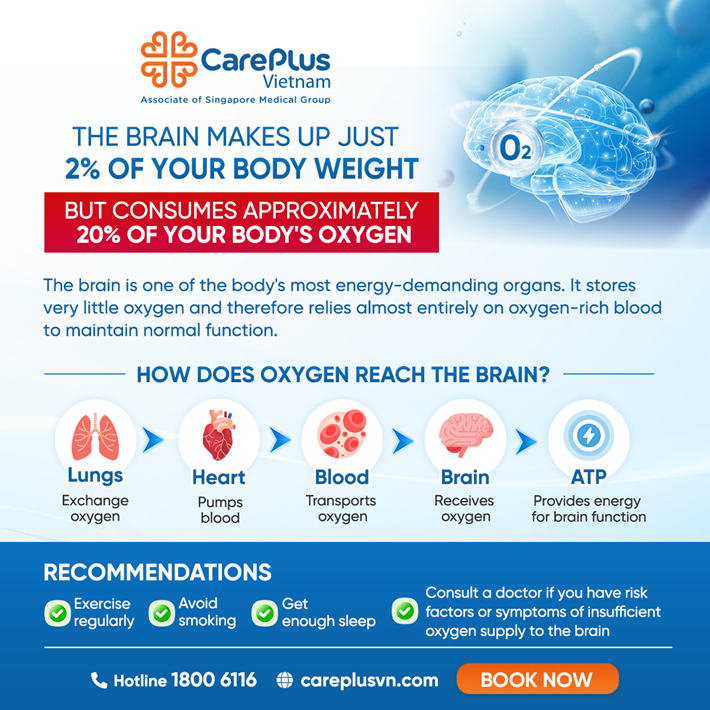
⁉️ THE BRAIN MAKES UP JUST 2% OF BODY WEIGHT, YET CONSUMES APPROXIMATELY 20% OF THE BODY'S OXYGEN - WHAT HAPPENS WHEN THE OXYGEN SUPPLY DECREASES?
11/3/2026 3:12:58 PM
🩺 The Brain – One of the Body's Most Energy-Demanding Organs
🔸 Although the brain accounts for only about 2% of total body weight, it consumes approximately 20% of the body's oxygen and around 20–25% of its glucose at rest. This reflects the enormous energy demands of nerve cells, which must maintain continuous activity around the clock.
🔸 What makes the brain particularly unique is that, unlike muscles or the liver, it has virtually no oxygen storage capacity. Therefore, it relies almost entirely on a continuous supply of oxygen- and glucose-rich blood to maintain normal function.
🩺 Why Is Oxygen So Important for the Brain?
Every nerve cell requires oxygen to produce ATP (Adenosine Triphosphate) – the primary energy source that helps:
▪️ Maintain the function of nerve cell membranes.
▪️ Transmit signals between neurons.
▪️ Synthesize neurotransmitters.
▪️ Support memory, learning, and cognitive processes.
👉 Most of the brain's energy is used to maintain ion gradients and transmit nerve impulses – processes that continue around the clock, even while we sleep.
🩺 What Happens When the Oxygen Supply to the Brain Decreases?
The brain receives its blood supply through the circulatory system.
After receiving oxygen from the lungs, blood is pumped by the heart to the brain. If this transportation process is disrupted, the amount of oxygen reaching brain tissue may also decrease.
As a result, nerve cell activity may become impaired due to insufficient energy to maintain normal function.
This does not necessarily mean that symptoms will appear immediately. However, in certain cases, reduced oxygen supply or decreased cerebral blood flow may affect brain function.
🩺 Possible Signs of Insufficient Oxygen Supply to the Brain
The following symptoms are non-specific, meaning they may be caused by various conditions. Reduced oxygen supply or decreased cerebral blood flow is only one possible explanation:
🔺 Difficulty concentrating
🔺 Brain fog and slowed thinking
🔺 Fatigue
🔺 Blurred vision or dizziness
🔺 Reduced work performance
🔺 Drowsiness or decreased alertness
👉 If these symptoms appear suddenly or persist over time, individuals should seek medical attention for proper examination, diagnosis, and identification of the underlying cause.
🩺 Factors That May Affect Oxygen Supply to the Brain
There are several possible contributing factors, including:
1️⃣ Reduced Blood Circulation
Blood is the body's primary means of transporting oxygen to the brain.
Certain cardiovascular or vascular conditions can affect blood flow to the brain, such as carotid artery stenosis, severe heart failure, or cerebrovascular diseases.
2️⃣ Lung Diseases
When the lungs cannot exchange oxygen effectively, oxygen levels in the blood may decrease, consequently reducing the amount of oxygen transported to organs throughout the body, including the brain.
3️⃣ Anemia
When the number of red blood cells or their ability to function decreases, the blood's capacity to transport oxygen is also reduced.
4️⃣ Other Conditions That May Contribute
🔺 Sleep apnea
🔺 Severe hypotension (low blood pressure)
🔺 Certain neurological disorders or metabolic conditions that may affect the brain's ability to receive or utilize oxygen, such as increased intracranial pressure or certain mitochondrial disorders.
These conditions require proper evaluation by a healthcare professional.
🩺 Severe Brain Hypoxia Is a Medical Emergency
It is important to distinguish between:
🔺 Fatigue and difficulty concentrating, which can have many different underlying causes.
🔺 Acute brain hypoxia caused by stroke, cardiac arrest, respiratory failure, or other medical emergencies.
👉 In cases of severe oxygen deprivation, nerve cells can be damaged very rapidly if emergency medical care and timely restoration of blood circulation and breathing are not provided.
🩺 How Can You Support Oxygen Supply to the Brain?
Measures that help maintain cardiovascular and circulatory health may also contribute to supporting oxygen delivery to the brain:
✅ Exercise regularly.
✅ Avoid smoking.
✅ Get enough sleep.
✅ Keep blood pressure, blood glucose, and blood lipid levels under control.
✅ Manage heart conditions, lung diseases, or anemia according to your doctor's recommendations.
✅ Seek medical attention early if you frequently experience dizziness, fainting, shortness of breath, or cognitive decline.
🌟 The brain is an organ with exceptionally high energy demands. Although it accounts for only about 2% of body weight, it consumes approximately one-fifth of the body's oxygen. To function effectively, the brain requires a continuous supply of oxygen and glucose through the circulatory system.
🌟 When this supply is disrupted, brain function may be affected to varying degrees. However, symptoms such as headaches, dizziness, or difficulty concentrating are non-specific and should not automatically be attributed to "insufficient oxygen supply to the brain." Identifying the underlying cause requires medical examination and assessment by a specialist.
CarePlus Vietnam
Member of Singapore Medical Group
📞 Hotline: 1800 6116
🌐 careplusvn.com