The Role of Gastrointestinal Endoscopy in Irritable Bowel Syndrome (IBS)
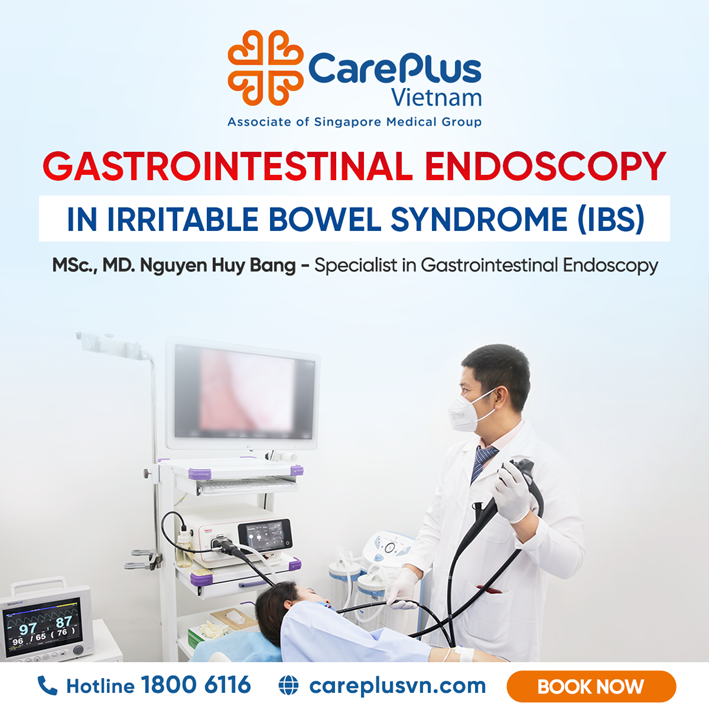
7/14/2026 9:01:13 AM
Irritable Bowel Syndrome (IBS) is classified as a Disorder of Gut–Brain Interaction (DGBI) and is primarily diagnosed based on clinical symptoms according to the Rome IV diagnostic criteria. In most patients, IBS does not cause structural abnormalities in the gastrointestinal (GI) tract. Therefore, gastrointestinal endoscopy is not routinely performed to confirm the diagnosis of IBS.
The primary role of gastrointestinal endoscopy is to exclude other gastrointestinal diseases in patients who present with alarm features, belong to high-risk groups, or have atypical clinical presentations. Appropriate use of endoscopy not only helps detect serious underlying conditions but also avoids unnecessary procedures, reduces healthcare costs, and minimizes potential risks to patients.
Colonoscopy
According to current clinical guidelines, patients who meet the Rome IV criteria for IBS and do not have alarm features generally do not require colonoscopy solely to confirm the diagnosis of IBS.
However, colonoscopy is recommended in the following situations:
-
Patients with alarm features, including:
-
Gastrointestinal bleeding or blood in the stool
-
Unexplained iron deficiency anemia
-
Unintentional weight loss
-
Nocturnal diarrhea or symptoms that awaken the patient from sleep
-
Persistent fever or other signs of systemic inflammation
-
New-onset symptoms in older adults without a previous history of IBS
-
A family history of colorectal cancer, inflammatory bowel disease (IBD), or celiac disease
-
Patients with IBS-D or chronic diarrhea
Colonoscopy is recommended, particularly when microscopic colitis needs to be excluded. In these cases, biopsies should be obtained from both the right and left colon, even if the colonic mucosa appears normal during endoscopy, as microscopic colitis may only be diagnosed through histopathological examination.
Colorectal cancer screening
Patients who have reached the recommended age for colorectal cancer screening should undergo colonoscopy according to screening guidelines. Based on recommendations from the U.S. Preventive Services Task Force (USPSTF) and several gastroenterology societies, average-risk individuals should begin screening at 45 years of age. In this setting, colonoscopy is performed for cancer screening rather than for IBS.
Individuals at increased risk for colorectal cancer
Patients with a first-degree relative diagnosed with colorectal cancer before the age of 60, or with multiple affected family members, are generally advised to begin screening at 40 years of age, or 10 years earlier than the youngest affected relative, whichever comes first.
Persistent or progressive symptoms
Patients whose symptoms persist or worsen despite appropriate treatment should be re-evaluated, and colonoscopy may be indicated to exclude other gastrointestinal diseases.
When Is Colonoscopy Not Necessary?
Young patients who meet the Rome IV criteria, have no alarm features, normal physical examination findings, and routine laboratory results that do not suggest an underlying organic disease generally do not benefit from colonoscopy. In these cases, a positive clinical diagnosis of IBS helps reduce unnecessary investigations, lower healthcare costs, and alleviate patient anxiety.
Upper Gastrointestinal Endoscopy
Routine upper GI endoscopy (esophagogastroduodenoscopy) is not recommended for all patients with IBS.
It may be considered in patients who have:
Prominent upper gastrointestinal symptoms such as epigastric pain, dysphagia, persistent vomiting, or alarm features suggestive of upper GI disease
Suspected structural disease involving the esophagus, stomach, or duodenum
Suspected celiac disease after the initial evaluation
In clinical practice, serologic testing (anti-tissue transglutaminase IgA together with total serum IgA) is typically performed first. Upper endoscopy with duodenal biopsy is indicated if serologic testing is positive or if clinical suspicion remains high.
For Helicobacter pylori infection, non-invasive tests, such as the urea breath test or stool antigen test, are generally preferred in appropriate patients. IBS alone is not an indication for upper GI endoscopy solely to detect H. pylori infection.
The Role of Endoscopy in IBS Research
Beyond its clinical applications, gastrointestinal endoscopy plays an important role in advancing our understanding of IBS pathophysiology.
Mucosal biopsy specimens obtained during endoscopy enable researchers to investigate multiple mechanisms involved in IBS, including:
-
Mast cell density and mucosal immune cell infiltration
-
Serotonin levels and enteric neurotransmitters
-
Intestinal barrier integrity and permeability
-
Expression of low-grade inflammatory cytokines
-
Composition and function of the gut microbiota
These studies continue to improve our understanding of the roles of mucosal immunity, the gut microbiome, and the gut–brain axis in IBS, while also contributing to the development of novel therapeutic approaches.
One area of ongoing research is Fecal Microbiota Transplantation (FMT). Although some studies have reported symptom improvement in selected patients, results remain inconsistent across clinical trials. At present, FMT is not recommended as routine treatment for IBS and is mainly performed within the context of clinical research.
Gastrointestinal endoscopy is not a routine diagnostic test for IBS. Instead, it plays an important role in excluding other gastrointestinal diseases in patients with alarm features, those at increased risk, or those with atypical clinical presentations. Appropriate endoscopic evaluation, guided by clinical assessment and current evidence-based recommendations, helps optimize diagnostic accuracy, avoid unnecessary procedures, and improve patient care.
Meanwhile, mucosal biopsy obtained during endoscopy remains a valuable research tool in the study of IBS pathophysiology. Ongoing research continues to clarify the roles of mucosal immunity, the gut microbiota, and the gut–brain axis, paving the way for more personalized treatment strategies in the future.