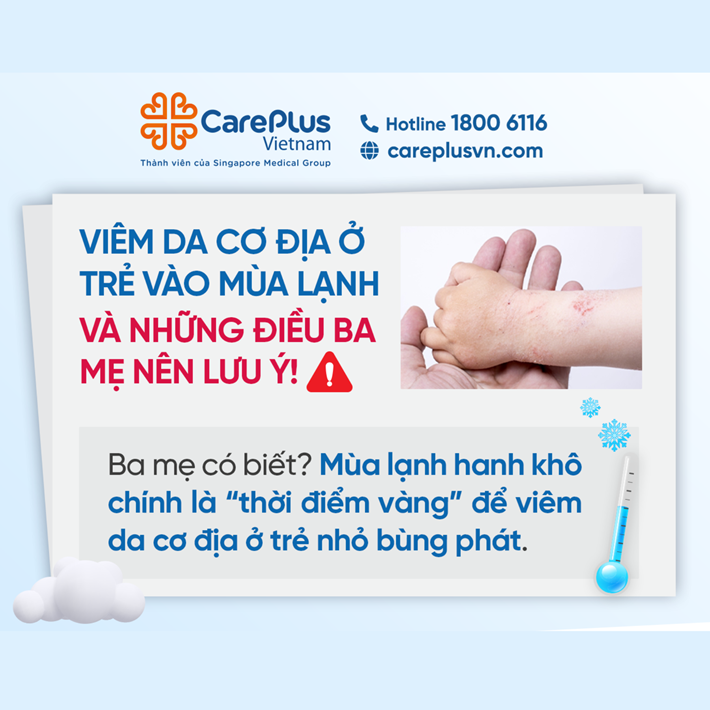
Atopic Dermatitis in Children During the Cold Season – What Parents Need to Know!
11/27/2026 1:16:47 PM
⚠️ Did you know? The cold, dry season is the "golden time" for atopic dermatitis to flare up in young children. When temperatures drop and air humidity is low, a baby's skin loses moisture faster, weakening its natural protective barrier. The skin then becomes dry and cracked, making it easier for bacteria and allergens to enter.
The December health bulletin shares useful information about atopic dermatitis and how to care for your child's skin when the weather turns cold.
1️⃣. Why does cold weather make atopic dermatitis flare up?
▪️ Lower temperatures and low humidity make a baby's skin lose water quickly and weaken the skin barrier, leading to dryness and cracking, and allowing bacteria and allergens to enter more easily. Children with atopic dermatitis already have sensitive skin, so they become red, itchy, and develop rashes more easily when exposed to cold wind.
▪️ In addition, bathing in hot water during the cold season dries the skin and makes inflammation worse.
2️⃣. Atopic dermatitis – a common chronic skin disease in children
❗ This is a common skin condition, characterized by small blisters on a red base of skin. It is very itchy, causing children to cry, fuss, and lose sleep.
▪️ Infants: usually appears on the cheeks, forehead, and face, and may spread over the whole body.
▪️ Older children: lesions usually appear on the wrists, ankles, hands, feet, elbows, and behind the knees.
▪️ Itching is the main symptom, making it hard for children to sleep, causing poor appetite and slow growth. Heavy scratching leads to abrasions and bleeding, which easily become infected. In severe cases, the skin may ooze fluid or pus, and may even become seriously infected.
📊 About 50% of children continue to have atopic dermatitis into adulthood, although the disease usually improves with age.
3️⃣. A guide to 6 ways to treat and care for the skin of children with atopic dermatitis
🔸 Moisturizing – the key to controlling the disease:
▪️ This is the foundation of atopic dermatitis treatment. Apply at least 2 times a day, ideally within 3 minutes after bathing while the skin is still damp.
▪️ Choose fragrance-free, paraben-free creams or ointments that contain ceramide, glycerin, or hyaluronic acid.
▪️ Apply all over the body, especially the cheeks, lower legs, elbows, and behind the knees.
▪️ Test a small amount first, because some children have skin that is sensitive to ingredients in emollients.
🔸 Bathing properly
▪️ Bathe once a day with warm water at 36–37°C. Avoid water that is too hot, as it strips away the skin's natural oils.
▪️ Limit bath time to no more than 10 minutes.
▪️ Use a gentle, fragrance-free cleanser, or one containing moisturizing ingredients such as glycerin, oatmeal, or ceramide.
▪️ Pat dry gently with a soft towel; do not rub.
🔸 Appropriate clothing
▪️ Choose 100% cotton that is soft, absorbent, and breathable. Avoid wool, felt, polyester, and nylon, as they easily cause heat and sweating and rub harshly against the skin.
▪️ Clothes should fit well. Dress your child in several thin layers instead of one thick layer so that body temperature is easier to adjust.
🔸 Living environment
▪️ Keep the temperature and humidity comfortable for the patient. Avoid air that is too dry or hot, which makes the child sweat and give off heat. This is a trigger of the itch–scratch cycle.
▪️ Avoid dust, cigarette smoke, stuffed toys, and harsh cleaning products that easily irritate your baby's skin.
🔸 Washing and storing clothes
▪️ Use laundry detergent made for sensitive skin, free of fragrance and harsh bleaching agents.
▪️ Rinse thoroughly several times with clean water to remove any soap residue.
▪️ Dry clothes in a cool, airy place with gentle sunlight, and avoid scented fabric softeners.
🔸 Daily habits
▪️ Keep your baby's nails short, clean, and not sharp. You may need to put gloves on your baby at night to prevent scratching during sleep.
▪️ Limit scratching, as it tears the skin and makes infection more likely.
🔔 If atopic dermatitis in children is not treated promptly, it can lead to infection, skin ulcers, and permanent dark marks and scars that affect appearance later in life. Therefore, when a child shows signs of the condition, the family should take the child to a dermatologist for examination and treatment according to an appropriate protocol. This helps prevent the disease from becoming more severe and avoids unfortunate complications that may result from self-treatment.