PROACTIVE BREAST CANCER SCREENING – A SMALL ACTION TO PROTECT WOMEN’S HEALTH
8/17/2026 5:14:21 PM
Breast cancer is one of the most common cancers among women, both globally and in Vietnam.
According to GLOBOCAN 2024, Vietnam recorded an estimated 25,711 new breast cancer cases and 10,609 deaths in 2024. It ranks first in incidence among all cancers in Vietnamese women, accounting for 28.1% of all new female cancer cases.
Notably, when detected at an early stage, breast cancer carries a significantly better prognosis. Therefore, proactively observing changes, performing self-examinations, and undergoing routine screening are crucial steps in safeguarding women's health.
1️⃣ EARLY RECOGNITION – DO NOT IGNORE SUBTLE CHANGES
Breast Self-Examination (BSE) cannot replace clinical evaluations or formal medical screening, but it helps you become familiar with the normal size, shape, and texture of your breasts, making it easier to spot abnormal changes.
🚨 Warning Signs to Watch For:
-
A new palpable mass or localized swelling, thickening, or firmness.
-
Asymmetric sagging or nipple inversion/retraction.
-
Skin changes (erythema, dimpling, skin tethering).
-
Unilateral nipple discharge.
-
Axillary lymphadenopathy or supraclavicular lymph node swelling.
If you notice any of these signs, do not hesitate—seek immediate medical evaluation!
🔎 3-STEP GUIDE TO BREAST SELF-EXAMINATION (BSE) AT HOME
Perform BSE 5 to 7 days after the end of your menstrual cycle, using three main steps: visual inspection in front of a mirror, standing/sitting palpation, and supine palpation including the axillary area.
-
Step 1: Visual Inspection
-
Undress and stand straight or place hands on hips in front of a mirror.
-
Compare the contour, size, and skin color of both breasts for marked asymmetry or discoloration.
-
Look for localized dimpling, skin puckering, an "orange-peel" appearance (peau d'orange), or nipple inversion.
-
-
Step 2: Palpation (Standing or Sitting)
-
Raise your left arm above or behind your head.
-
Use the pads of the three middle fingers of your right hand, keeping them flat against the left breast.
-
Move in small circular concentric motions from the outer perimeter inward toward the nipple, applying light, medium, and deep pressure to evaluate different tissue layers.
-
Repeat the procedure on the right breast with your left hand.
-
-
Step 3: Supine Palpation & Axillary/Clavicular Assessment
-
Lie flat with a small pillow under the shoulder of the breast being examined, placing the ipsilateral arm behind your head/forehead.
-
Palpate the entire breast tissue with the opposite hand as in Step 2 to ensure no deep tissue lesions are missed.
-
Palpate the axillary fossa and supraclavicular fossa for firm, enlarged, or tender lymph nodes.
-
Gently squeeze the nipple to check for abnormal discharge or bleeding.
-
Note: BSE helps identify early abnormalities, but regular clinical breast exams (CBE) and routine screening remain essential.
2️⃣ BREAST CANCER SCREENING – BE PROACTIVE BEFORE SYMPTOMS APPEAR
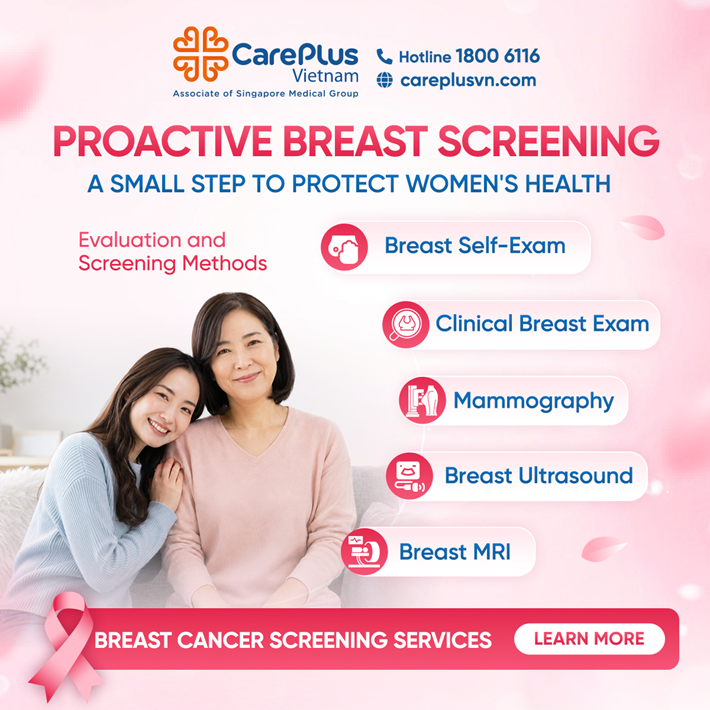
Breast cancer screening utilizes diagnostic modalities—such as mammography, breast ultrasound, and dynamic contrast-enhanced breast MRI—to detect subclinical lesions before overt clinical symptoms develop.
👩 WHO IS AT ELEVATED RISK?
Risk factors for breast cancer include:
-
Advanced age (particularly 40 years and older).
-
Family history of breast or ovarian cancer.
-
Pathogenic genetic mutations (e.g., BRCA1/BRCA2).
-
Personal history of high-risk proliferative breast lesions.
-
Specific hormonal, reproductive, and lifestyle factors.
👉 Do not wait for symptoms to appear. Screening intervals and modalities should be tailored based on age, family history, and individual risk stratification.
🩺 DIAGNOSTIC & SCREENING MODALITIES
Depending on age and risk status, clinicians may recommend:
-
Clinical Breast Exam (CBE)
-
Mammography (MMG)
-
Breast Ultrasound
-
Dynamic Breast MRI (for high-risk individuals)
-
Core Needle / Fine Needle Aspiration Biopsy (when lesions require histological evaluation)
-
Genetic Counseling and Testing (when indicated)
Spending a few minutes every month on self-awareness, combined with appropriate routine screening, empowers women to take charge of their health.