What Should People with Viral Hepatitis Eat to Keep Their Liver Healthy?
11/13/2026 4:17:45 PM
One of the most common questions I hear when seeing patients with hepatitis is:
“Doctor, I have viral hepatitis. What should I eat or avoid to keep my liver healthy?”
Some people avoid beef, while others completely cut out eggs and seafood. Some turn to artichoke or Solanum procumbens (a traditional Vietnamese medicinal herb), while others spend millions of VND on dietary supplements.
Some even ask: “Doctor, do you know any good traditional medicine practitioners you could recommend?”
Well, just a reminder – I'm a Western medicine doctor!
The truth is, there is one important thing people with hepatitis should remember: There is no miracle food that can instantly make your liver healthier. What matters most is maintaining a balanced diet, avoiding factors that can damage the liver, and following appropriate medical treatment.
So, what should people with hepatitis B or C eat?
1. DO PEOPLE WITH VIRAL HEPATITIS NEED TO FOLLOW A STRICT DIET?
The answer is: Not necessarily!
If liver function is preserved and there are no complications requiring dietary adjustments, patients can generally continue eating normally, enjoying a variety of foods while ensuring adequate nutrition.
There is no need to avoid beef, chicken, eggs, fish, or seafood simply because you have viral hepatitis. These are all important sources of protein that the body needs.
Protein helps maintain muscle mass, supports the immune system, and contributes to recovery. Excessive dietary restrictions, especially cutting back on protein without medical advice, may lead to nutritional deficiencies and muscle loss.
If dietary adjustments are needed, focus on the factors that genuinely benefit liver health and metabolism.
Specifically, you should:
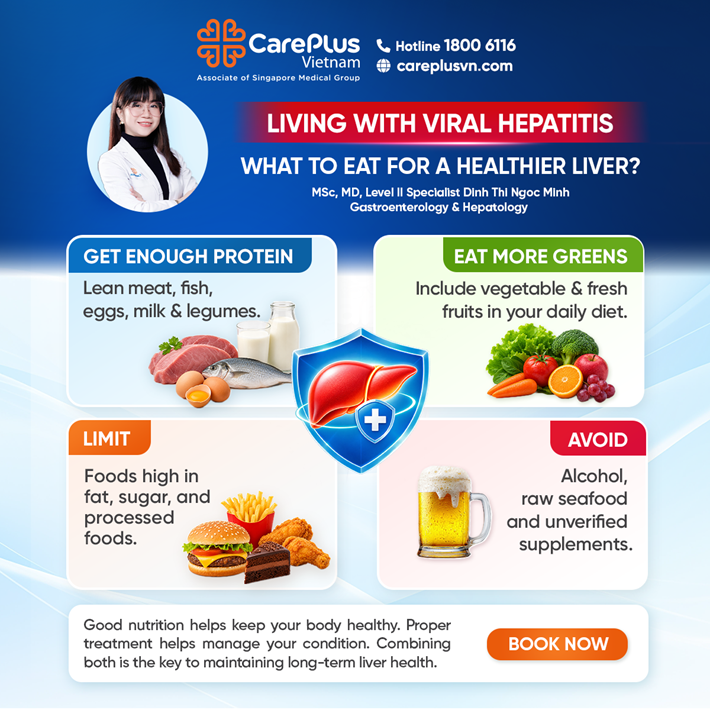
- Limit foods high in saturated fat, such as fatty meats and frequently consumed fried foods. Also reduce sugary drinks, sweets, and foods containing added sugars.
- Avoid raw or undercooked oysters, clams, mussels, and other shellfish. These foods may contain Vibrio vulnificus, a bacterium that can cause severe infections, particularly in people with chronic liver disease.
- Minimize alcohol consumption, ideally avoiding it completely. Alcohol can worsen liver damage in people with viral hepatitis. And let me remind you: no liver detox pill can undo the damage caused by a night of heavy drinking!
Please note that patients with decompensated cirrhosis or other complications require an individualized dietary plan based on their specific medical condition. A one-size-fits-all approach is not appropriate.
2. SO, WHAT SHOULD PEOPLE WITH HEPATITIS EAT?
There is no need to search for special or exotic foods. Start with a varied, balanced diet that meets your body's nutritional needs.
- Get enough protein: Choose lean meats, fish, eggs, milk, beans, and legumes.
- Eat more vegetables and whole fruits: These provide essential fiber, vitamins, and minerals.
- Choose whole grains and healthy fats: Include oats, brown rice, nuts, fatty fish such as salmon, mackerel, and sardines, as well as suitable vegetable oils.
- Maintain a healthy weight and exercise regularly: This is particularly important for people who are overweight, obese, or have coexisting fatty liver disease.
In short, there is no need for complicated diets or to chase after foods advertised as “liver boosters.” What truly matters is maintaining a healthy eating pattern over the long term.
3. WHAT ABOUT SOLANUM PROCUMBENS, ARTICHOKE, AND LIVER SUPPLEMENTS?
These products attract considerable interest, especially when advertised as having detoxifying properties or the ability to restore liver function.
Certain herbal remedies, such as Solanum procumbens, artichoke, Phyllanthus amarus (stonebreaker), and Adenosma caeruleum have been studied for their potential biological effects. However, current evidence is insufficient to confirm that these products can cure viral hepatitis or replace antiviral medications.
More importantly, caution is needed with products of unknown origin, unclear ingredients, or those containing undisclosed additives. Certain herbs and dietary supplements can cause drug-induced liver injury (DILI), potentially leading to acute liver failure.
Therefore, before using any liver supplements, herbal teas, or dietary supplements, patients should consult their treating physician.
Don't let your efforts to support your liver health end up putting an additional burden on it!
4. THE MOST IMPORTANT THING IS NOT WHAT TO EAT TO BOOST LIVER HEALTH, BUT HOW TO MANAGE THE DISEASE PROPERLY
Diet plays an important role. However, for people living with hepatitis B or C, what matters even more is having their condition properly assessed and receiving regular medical follow-up.
For hepatitis B:
Doctors will assess viral activity, liver enzyme levels, the extent of liver damage, and other relevant factors to determine whether antiviral treatment is necessary.
For hepatitis C:
Today, most patients can be cured with direct-acting antiviral (DAA) medications, with cure rates generally exceeding 95% when appropriately treated.
Don't focus solely on finding liver-boosting foods or detox products while neglecting follow-up appointments, laboratory tests, and treatment when medically indicated.
People with viral hepatitis do not necessarily need to follow overly restrictive diets or search for miracle foods to nourish their liver.
Instead, maintain a balanced diet, limit alcohol, exercise caution when using liver supplements of unknown origin, and most importantly, ensure proper medical monitoring and treatment.
Good nutrition helps keep your body healthy. Proper treatment helps manage your condition effectively. Combining both is the key to maintaining long-term liver health.
Wishing everyone a happy, healthy life and greater peace of mind on your journey toward better health!