RSV Virus - The leading cause of respiratory disease in infants
During this month, respiratory disease has increased dramatically in children. Many children are hospitalized with fever, cough, or difficulty breathing, especially wheezing, asthma. Because of weather changes, storms, changing seasons, one of the most noticeable respiratory failure factors in children under 2 years old is a respiratory syncytial virus (RSV virus).
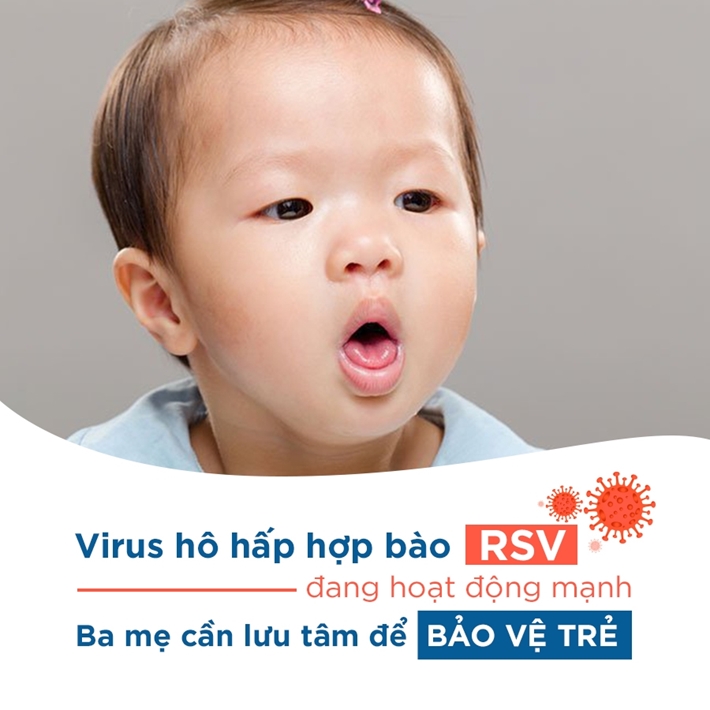
11/13/2020 9:47:57 AM
RSV is a respiratory disease that was discovered in 1963 and has caused several major outbreaks hundreds of years ago.
The virus enters the body through the eyes, nose, or mouth by infected respiratory secretions. Viruses are also inhaled or transmitted to others through direct contact, especially it can live for many hours on objects such as tables and toys. Children are more likely to get the virus if they accidentally touch objects and put them in their eyes and nose.
1. How dangerous is it (RSV) for young children?
Disease caused by a respiratory syncytial virus infection usually progresses with common respiratory symptoms such as fever, cough, mild runny nose, which can last from 1 to 3 weeks and then recover without taking any medication. However, in children under 1 year old (especially under 6 months old), the RSV virus can cause severe pneumonia and severe respiratory failure.
2. Who is susceptible to a serious illness?
-
Children under 1-year-old (especially children under 6 months old)
-
Premature babies under 35 weeks
-
Children with chronic heart disease, immunodeficiency, etc
-
Have uncontrolled asthma
-
Has tobacco smoke exposure
3. When should children with signs of the respiratory disease need to see a doctor?
When children show signs (cough, runny nose, sneezing stuffy nose) and accompanied by one of the following signs:
-
High fever> 38c especially children under 3 months old
-
Reduced suckling, lactation
-
Shortness of breath, shortness of breath, and tug of breath
-
Purple lips
However, for older children (> 2 years old), if they only have a mild fever, can eat well, do not breathe fast, parents can still monitor at home for 1 or 2 days.
4. Can the disease be cured?
-
According to the normal course, the disease will go away on its own. In mild cases, children are sent home to monitor for severe signs, just let them drink enough water according to daily needs, reduce fever when needed, the disease will go away in 1-3 weeks.
-
Cough medicines (from herbal to western medicine) are NOT effective in treating the disease. Even many cough medicines cause dry sputum to aggravate the condition.
-
A few cases of severe progression require hospital treatment because of complications and bacterial superinfection pneumonia (subjects at risk of serious illness)
5. How to prevent the disease?
-
There is currently no vaccine to prevent the syncytial virus, so children will be more likely to be infected with the virus. Therefore, early detection to plan treatment is very important.
-
Palivizumab for prophylaxis is for children at risk of serious illness if infected with RSV viruses such as children with severe congenital heart disease, or chronic lung disease, ... but the use of the drug requires the prescription of a doctor and The drug is not available in Vietnam
-
Washing hands often before caring for babies (especially babies) is the most effective way to prevent transmission.
-
Limit contact with people with respiratory diseases (colds, flu, sickness, fever, ...)
In addition, it is necessary to ensure a reasonable diet to increase the child's immune system.